Understanding Lipedema is the first step toward better care.
Lipedema is a chronic condition that can cause disproportionate fat accumulation, tenderness, discomfort and heaviness in the legs or arms. This guide walks you through it, stage by stage, so you can take an informed next step.
Lipedema can be difficult to recognize, and its symptoms may be mistaken for other conditions. If you have persistent discomfort, tenderness, heaviness or disproportionate fat accumulation, a clinical evaluation can help clarify what may be happening.
Your symptoms deserve careful evaluation.
Lipedema is not simply a cosmetic concern.
Understanding your options helps you make informed decisions.
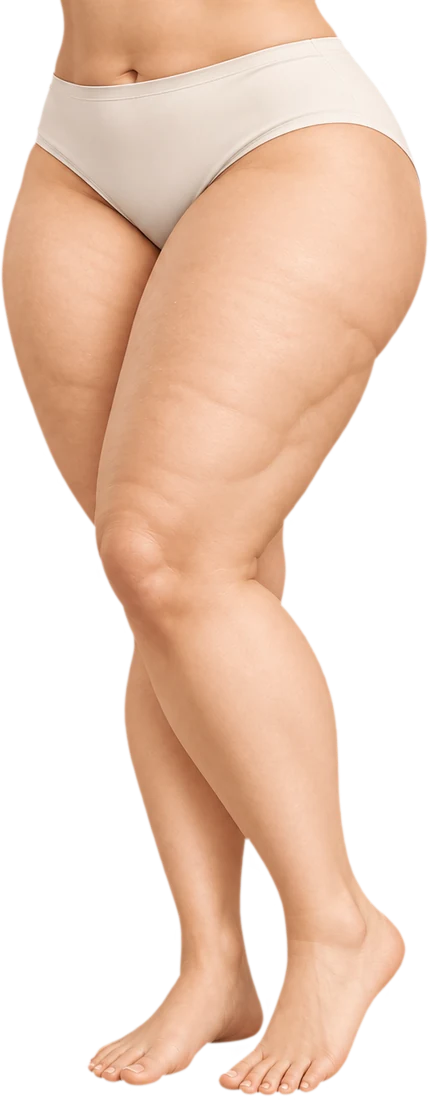
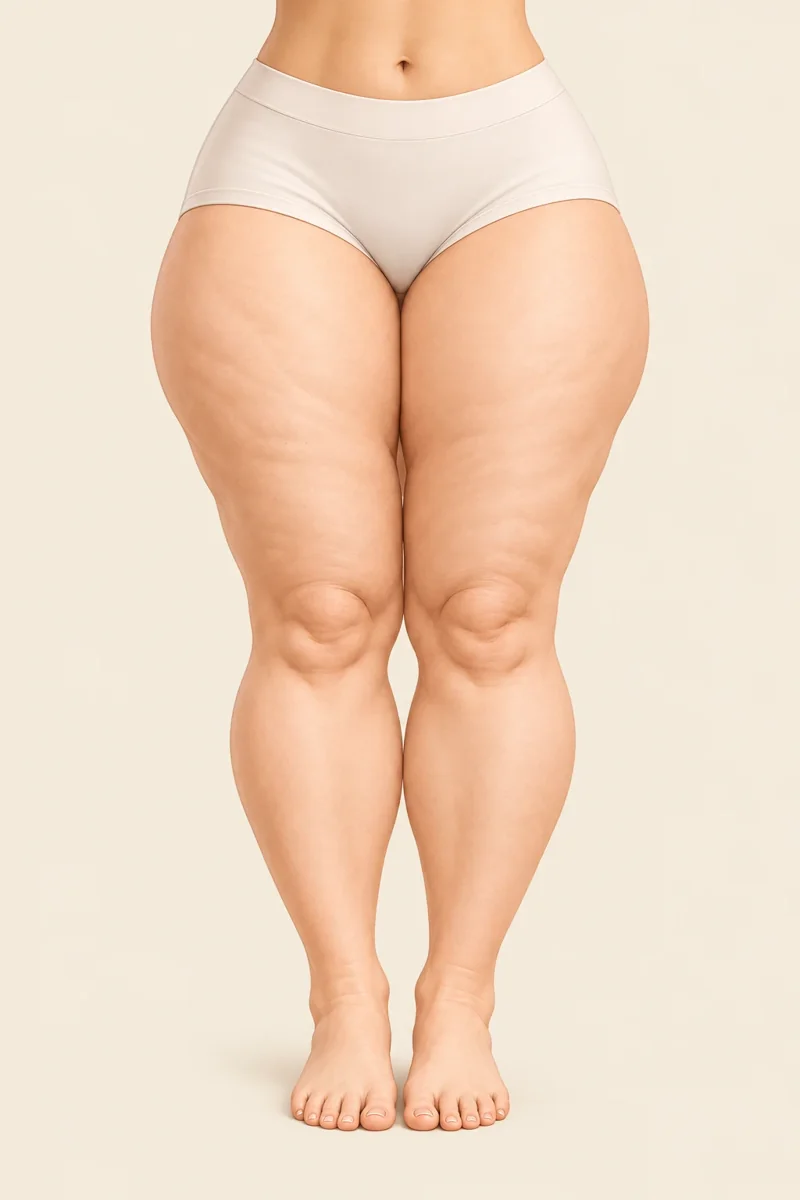
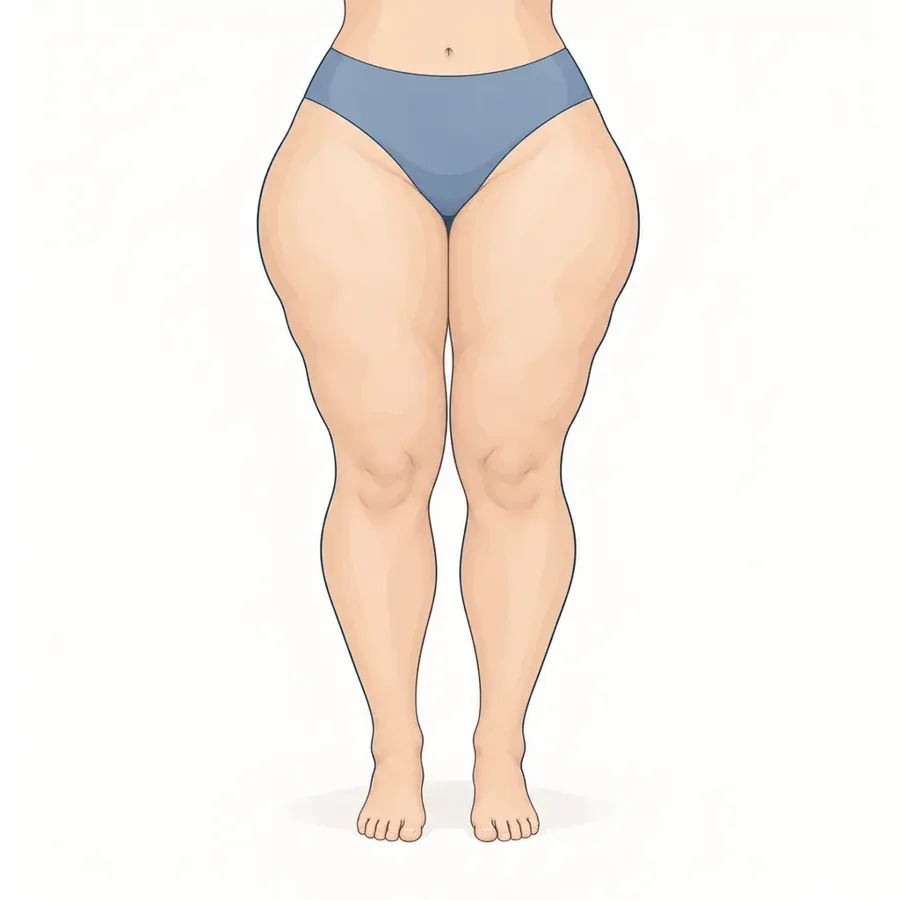
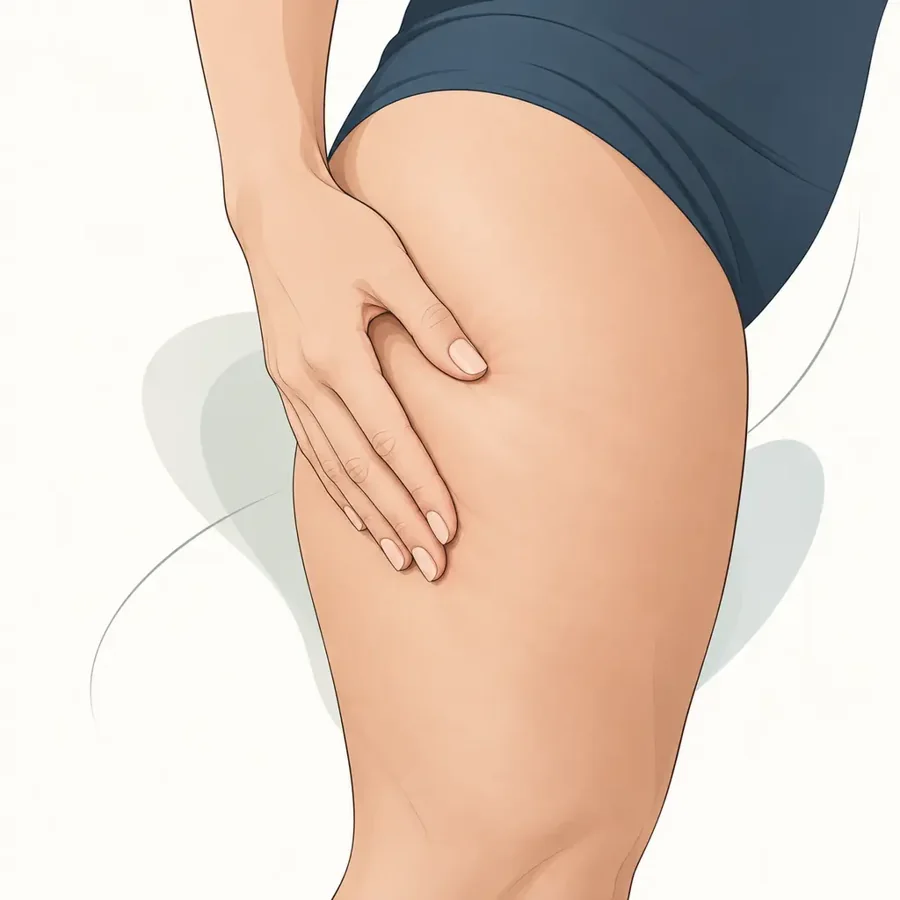
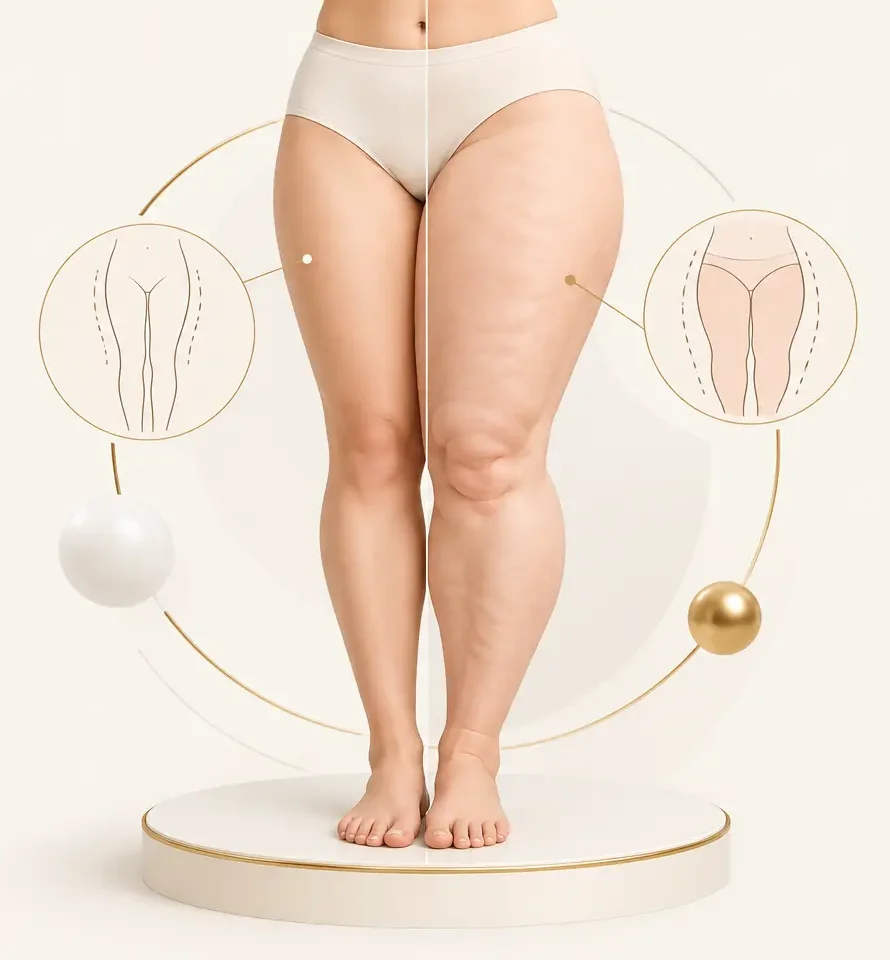
Lipedema is a chronic condition in which fat tissue builds up in an abnormal, usually symmetrical pattern. It most commonly affects the legs and hips, and sometimes the arms, while the hands and feet are often relatively spared.
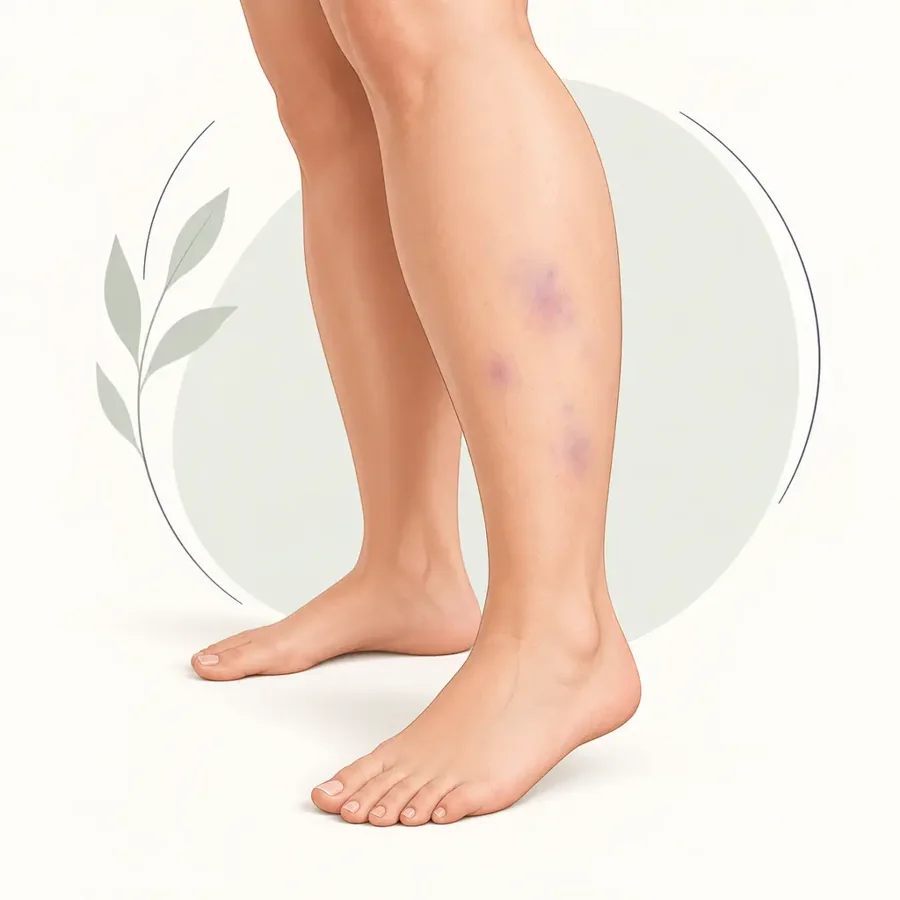
Many people with Lipedema experience pain, tenderness, easy bruising or a feeling of heaviness, and some find everyday movement more difficult over time. It is reported predominantly in women, although sex alone is not a diagnostic rule.
Its underlying causes are still being researched, with studies exploring hormonal, genetic, inflammatory and metabolic factors.
Lipedema is a medical condition, not a personal failure.
Lipedema can look and feel different from person to person. These signs may be associated with the condition, but they do not establish a diagnosis.
01
Disproportionate fat distribution
Fat accumulation may appear relatively symmetrical in the hips, thighs, legs or arms.
02
Tenderness or pain
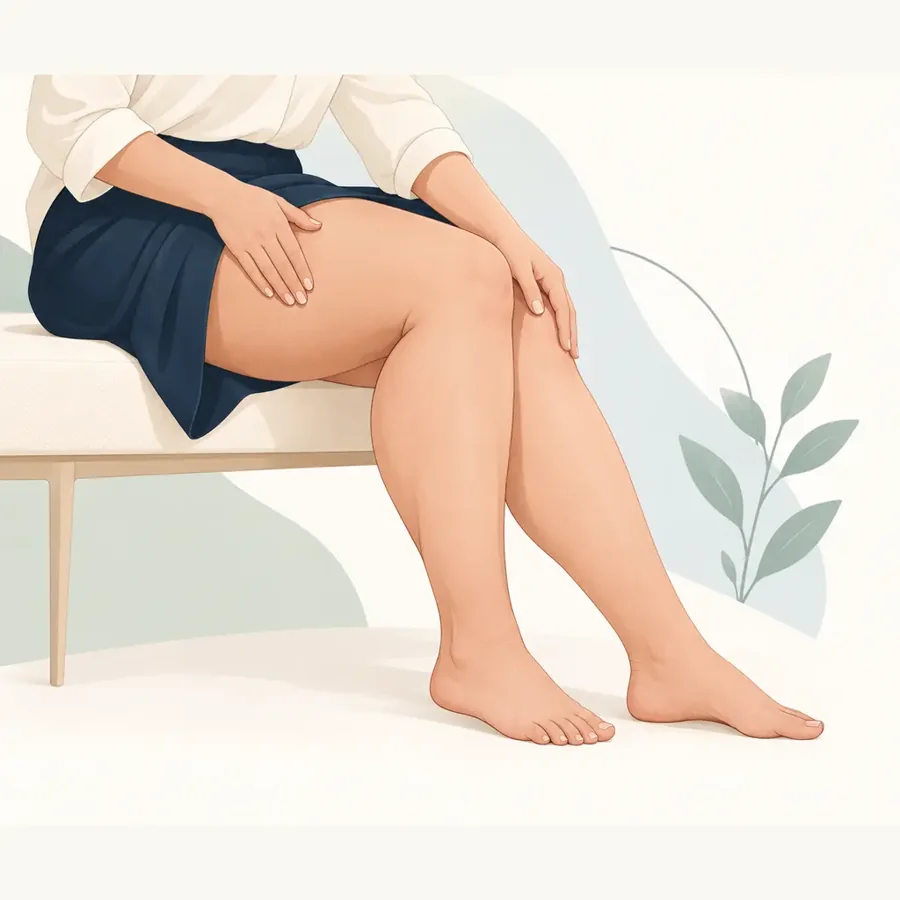
Affected tissue may be painful or sensitive to pressure.
03
Easy bruising
Some people notice they bruise more easily than expected.
04
A feeling of heaviness
The legs or other affected areas may feel heavy, uncomfortable or harder to move.
05
Changes around the ankles
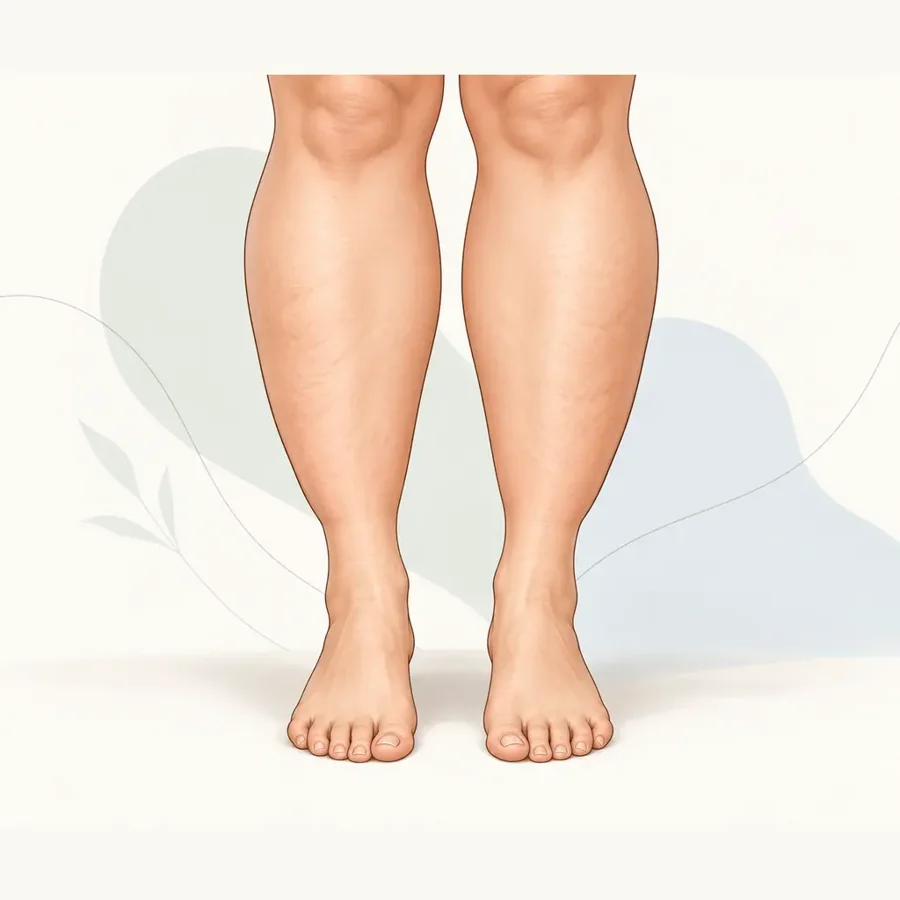
The feet are often relatively spared, which can create a visible transition at the ankles, although presentation varies.
06
Symptoms around hormonal changes
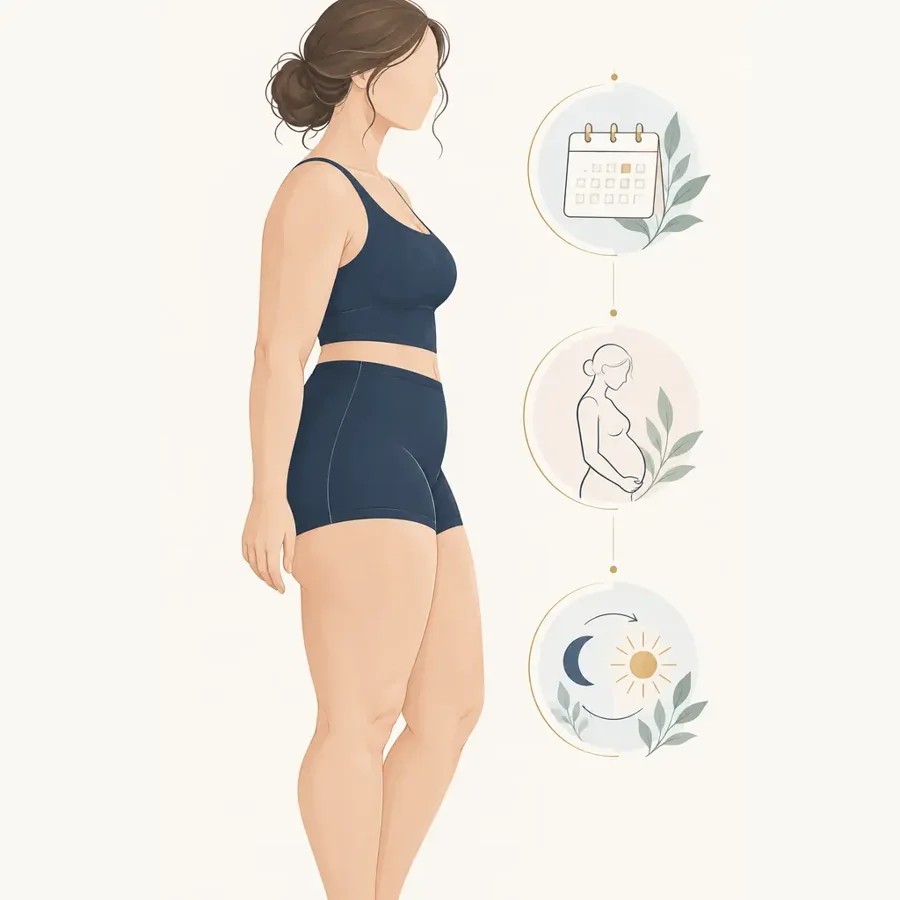
Some people report that symptoms first appeared or worsened around puberty, pregnancy or menopause.
Important: These signs can overlap with other medical conditions. A qualified clinician can help determine whether Lipedema or another condition may explain your symptoms.
Lipedema can be confused with other causes of changes in limb size or swelling, and these conditions can occur together. The overview below describes general tendencies only. It is not a set of diagnostic criteria.
General comparison of Lipedema, generalized obesity, lymphedema and chronic venous conditions
Feature
Lipedema
Generalized obesity
Lymphedema
Chronic venous conditions
Typical pattern
Often symmetrical fat build-up in the legs and hips, sometimes the arms.
Usually more generalized, including the trunk.
Swelling of one or both limbs; may be asymmetrical.
Mainly the lower legs; one or both sides.
Hands and feet
Often relatively spared.
May be involved.
Commonly involved, e.g. swelling of the foot or toes.
Ankle and foot swelling can occur, often later in the day.
Common sensations
Pain, tenderness and easy bruising are frequently reported.
Tissue tenderness is not typical.
Heaviness or tightness.
Aching, heaviness or cramping.
What is involved
Abnormal fat tissue beneath the skin; causes still being researched.
Excess body fat, with many contributing factors.
Impaired drainage of lymphatic fluid.
Impaired blood flow back through the leg veins; may cause skin changes or visible veins.
Lipedema
Typical pattern
Often symmetrical fat build-up in the legs and hips, sometimes the arms.
Hands and feet
Often relatively spared.
Common sensations
Pain, tenderness and easy bruising are frequently reported.
What is involved
Abnormal fat tissue beneath the skin; causes still being researched.
Generalized obesity
Typical pattern
Usually more generalized, including the trunk.
Hands and feet
May be involved.
Common sensations
Tissue tenderness is not typical.
What is involved
Excess body fat, with many contributing factors.
Lymphedema
Typical pattern
Swelling of one or both limbs; may be asymmetrical.
Hands and feet
Commonly involved, e.g. swelling of the foot or toes.
Common sensations
Heaviness or tightness.
What is involved
Impaired drainage of lymphatic fluid.
Chronic venous conditions
Typical pattern
Mainly the lower legs; one or both sides.
Hands and feet
Ankle and foot swelling can occur, often later in the day.
Common sensations
Aching, heaviness or cramping.
What is involved
Impaired blood flow back through the leg veins; may cause skin changes or visible veins.
Body shape, the appearance of the ankles or difficulty losing weight do not, on their own, prove Lipedema. An in-person assessment is needed to understand what is causing your symptoms.
Lipedema is generally diagnosed through a clinical assessment that combines your medical history with a physical examination. There is currently no single, universally accepted blood test or imaging study that confirms every case on its own.
1Step 1
Discuss your history
The clinician reviews when symptoms began, your discomfort, family history, changes over time and any previous treatment.
2Step 2
Clinical examination
The clinician assesses the affected areas, including tissue characteristics, distribution, tenderness and other relevant signs.
3Step 3
Consider other conditions
The clinician considers whether other causes or coexisting conditions should be investigated.
“
An evaluation is the starting point for understanding your symptoms and discussing appropriate next steps.
Dr. Nilay ShahABPS Board Certified Plastic Surgeon
Your guide on this journey
Care that starts with understanding
At Lipedema Surgeon, a consultation begins with listening. Your history, your symptoms and your goals shape the conversation, and every appropriate option is explained, including non-surgical care.
Dr. Nilay Shah is a board-certified plastic surgeon (ABPS) practicing in New York and Miami, with a focus on surgical and non-surgical facial aesthetics and body contouring. His approach is individual: no templates, no trends.
ABPS Board Certified Plastic SurgeonNew York · Miami
Plastic Surgery Residency
University of Texas Southwestern, Dallas
Aesthetic Surgery Fellowship
New York Eye & Ear Infirmary of Mount Sinai
General Surgery Training
University of Pennsylvania, Ohio State University and Mayo Clinic Arizona
Research
Minimally invasive surgery at H. Lee Moffitt Cancer Center and Ohio State University
Time to listen to your full history and concerns
Clear explanation of every suitable option, including non-surgical care
An honest discussion of potential benefits, risks and limitations
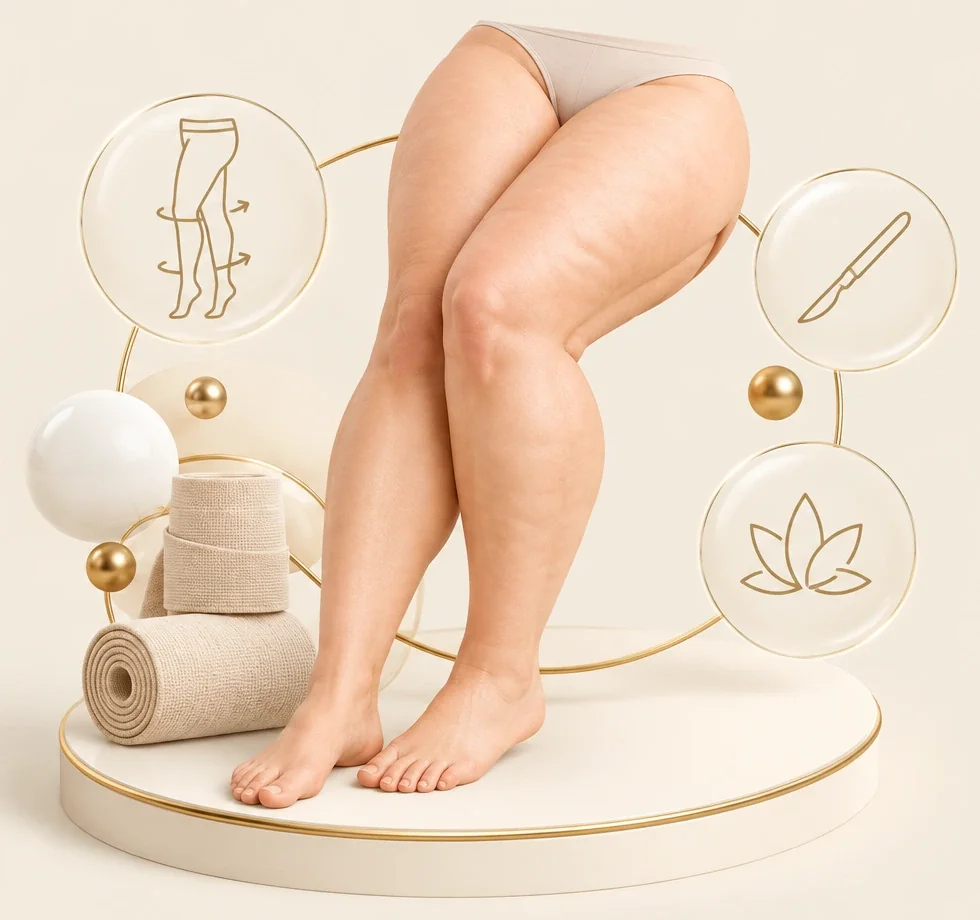
Treatment depends on your symptoms, clinical findings, goals, medical history and individual circumstances. A personalized plan may involve non-surgical care, surgery, or a combination of approaches.
01 · Non-surgical
Conservative management
Non-surgical approaches may help manage symptoms and support daily function. When clinically appropriate, they can include:
Compression garments
Individualized movement and exercise
Physical therapy
Manual lymphatic drainage, when indicated
Skin care and symptom management
Nutritional support and care for coexisting conditions
These approaches manage symptoms; they do not remove affected fat tissue. Diet and exercise are not a cure for Lipedema.
Lipedema reduction surgery, generally involving specialized liposuction techniques, may be considered for selected patients after appropriate clinical assessment.
It aims to remove affected fat tissue beneath the skin and may improve symptoms or function in some patients. Outcomes vary, and the evidence continues to develop.
Candidacy, technique, number of procedures, recovery, risks and expected benefits are discussed individually with a qualified surgeon.
Lipedema is a chronic condition. Surgery does not necessarily eliminate all symptoms or remove the need for future care.
Depending on your needs, ongoing care may include follow-up appointments, compression, rehabilitation, symptom management and coordination with other clinicians.
What to expect from the surgical evaluation process
Being evaluated for surgery does not mean surgery will be recommended. Each step is a conversation, and you decide what is right for you.
1
Step 01
Initial consultation
Discuss your symptoms, medical history, goals, concerns and any previous treatment.
2
Step 02
Individual assessment
Your condition is evaluated, including whether further testing, conservative care or specialist input is appropriate.
3
Step 03
Personalized plan
If surgery may be appropriate, you discuss the proposed approach, areas, potential benefits, limitations, risks, anesthesia, recovery and costs.
4
Step 04
Recovery and follow-up
Aftercare may involve compression garments, activity guidance, scheduled reviews and other individualized recommendations.
How Dr. Shah approaches liposuction
From the practice
Techniques
Advanced tumescent and power-assisted liposuction (PAL).
Anesthesia
Local or general anesthesia, chosen with you during consultation.
Staging
Fat removal is limited to about 5 liters per session for safety, so more extensive treatment may be planned in stages.
Aftercare
A compression garment for several weeks, light walking from the first days, and a first follow-up with Dr. Shah in week one.
Based on the practice’s liposuction information. Whether surgery is appropriate for Lipedema, and how it would be planned, is decided individually after your assessment.
Whatever your path, care continues beyond a single appointment. A consultation is a chance to be heard and to understand your options, with no obligation to proceed.
What your consultation includes
A chance to discuss your symptoms
A review of your medical history
A conversation about your goals
An explanation of suitable pathways
Time to ask your questions
Benefits, risks and limitations
Aftercare, where relevant, may include compression garments, activity guidance, scheduled reviews and coordination with other clinicians.
Questions along the way
Frequently asked questions
General information only. Your consultation is the place for answers specific to you.
Lipedema is a chronic condition in which fat tissue builds up abnormally, usually in a symmetrical pattern, most often in the legs and sometimes the arms. It is commonly accompanied by tenderness, heaviness or easy bruising. It is reported predominantly in women, and its causes are still being researched.
Commonly reported signs include disproportionate fat in the hips, thighs, legs or arms; pain or tenderness to pressure; easy bruising; a feeling of heaviness; and relative sparing of the feet and hands. These signs overlap with other conditions and do not by themselves establish a diagnosis.
Lipedema is diagnosed through a clinical assessment: a detailed medical history and a physical examination. There is currently no single blood test or imaging study that confirms it on its own, although a clinician may recommend tests to look for other or coexisting conditions.
No. Lipedema is a distinct condition, although the two can occur together. Lipedema typically affects the limbs in a symmetrical pattern and is often associated with tenderness, whereas obesity usually involves fat more broadly across the body. A clinician can help tell them apart.
Yes. The legs are most commonly affected, but Lipedema can also involve the upper arms and sometimes the forearms, often with the hands relatively spared.
There is no known cure for Lipedema, and diet or exercise alone are not considered a cure. Staying active and looking after your overall health can still support mobility, wellbeing and the management of coexisting conditions. Affected areas may respond less to weight loss than other parts of the body.
Depending on your needs, conservative care may include compression garments, individualized exercise and movement, physical therapy, manual lymphatic drainage when indicated, skin care, and support for your overall health. These approaches aim to manage symptoms rather than remove affected tissue.
No. Surgery may be considered for selected patients after a careful clinical assessment. Suitability depends on your symptoms, overall health, medical history, goals and other individual factors. For many people, conservative care remains part of the plan, with or without surgery.
Lipedema reduction surgery generally uses specialized liposuction techniques to remove affected fat tissue beneath the skin. In some patients it may reduce symptoms such as pain or heaviness and help daily function, but results vary and the evidence continues to develop. The specific approach would be discussed during your consultation. [CONFIRM TECHNIQUE OFFERED WITH DR. SHAH]
As with any surgery, there are risks. They can include bleeding, infection, fluid collection, prolonged swelling or bruising, contour irregularities, changes in skin sensation, blood clots and anesthesia-related complications, and, rarely, more serious complications. Your surgeon will review the risks that apply to you.
Recovery varies with the extent of treatment, the areas treated and your overall health. Aftercare commonly involves compression and a gradual return to activity. Your personal recovery expectations would be explained during consultation. [INSERT PRACTICE-CONFIRMED RECOVERY GUIDANCE]
Some patients are treated in more than one stage, particularly when several areas are involved. Whether this applies to you depends on your assessment and individual plan.
Lipedema is a chronic condition. Surgery removes affected tissue in the treated areas but does not cure the underlying condition, and symptoms may persist or change over time. Ongoing care and follow-up help support long-term wellbeing.
Compression garments are commonly used after surgery and are often part of conservative care as well. The type and duration depend on your individual plan.
Cost depends on the areas treated, the number of stages and other individual factors, so it can only be estimated after a consultation. The practice can explain fees and any payment options at that time. [INSERT PRACTICE PRICING AND INSURANCE POLICY]
Only a clinical evaluation can determine this. A consultation allows a review of your symptoms, history and goals, and a discussion of whether conservative care, surgery or a combination may be appropriate.
Complete the enquiry form on this page and the practice team will contact you using your preferred method. You can also call the practice on 212-203-1020.
08
Stage 08 · Connect
Let’s talk about your concerns
Have questions about Lipedema or want to understand your treatment options? Submit an enquiry and the practice team can guide you through the next steps.